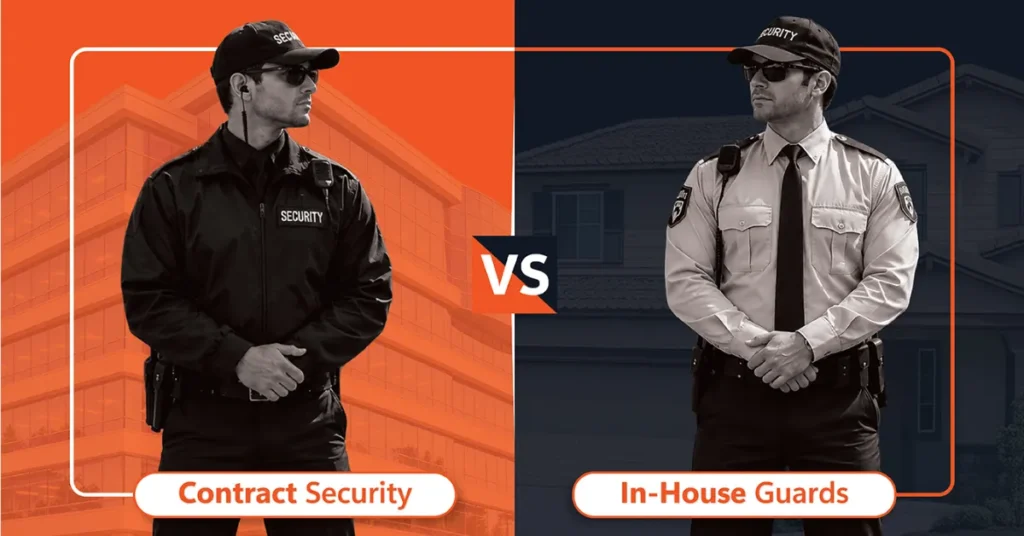
Choosing between in house security vs contract security is an important decision for businesses that want to protect their employees, property, customers, and daily operations. The right approach depends on your budget, security requirements, and the level of control you want over your security team. Some companies prefer managing their own guards, while others rely on professional providers for trained personnel and flexible staffing. Businesses exploring Business Security Services in Atlanta can benefit from comparing both approaches before making a long term commitment. Understanding the advantages and limitations of each option helps business owners make a practical choice that supports safety without creating unnecessary operational pressure.
Understanding In House Security vs Contract Security
What Is In House Security?
An in house security team consists of guards employed directly by a business. Management handles recruitment, training arrangements, scheduling, payroll, supervision, and performance reviews. This approach gives organizations direct oversight of their security personnel and allows guards to become familiar with company policies, employees, facilities, and daily routines.
For example, a manufacturing facility with restricted areas may prefer dedicated guards who understand its entry procedures and operational requirements. Over time, these employees can develop valuable knowledge of the workplace.
What Is Contract Security?
Contract security involves hiring an external security company to provide professional guards and related services. The provider typically manages staffing, scheduling, supervision, and other agreed responsibilities.
For businesses comparing in house vs contract security, the central difference is who manages the people and daily security operations. One approach offers direct employment and control, while the other provides access to an external team and its established management resources.
Pros and Cons of In House Security
Advantages of an Internal Security Team
Direct management is one of the biggest benefits of employing security personnel internally. Businesses can establish specific procedures, communicate expectations directly, and develop a team familiar with their workplace culture.
Other advantages include:
- Greater control over recruitment and daily responsibilities.
- Consistent familiarity with employees, visitors, and facilities.
- Easier alignment with internal policies and business objectives.
- Opportunities to develop long term relationships between guards and management.
These benefits can be particularly useful for large organizations with specialized security requirements.
Potential Disadvantages
An internal team also creates ongoing administrative responsibilities. Employers must manage recruitment, training, scheduling, payroll, staff absences, and performance monitoring. They may also need to arrange appropriate equipment and supervisory resources.
Maintaining enough personnel to cover every shift can become challenging when employees take leave or staffing needs increase unexpectedly. Smaller businesses may find that these responsibilities consume time that could otherwise be devoted to customers and core operations.
Consequently, in house security vs contract security is not simply a question of control. It is also a question of whether the organization has the resources to manage security staffing effectively.
Pros and Cons of Contract Security Companies
Advantages of Outsourcing Security
Contract security providers can simplify workforce management by supplying guards and coordinating staffing according to an agreed service arrangement. Businesses may gain access to personnel with relevant experience, established operating procedures, and professional supervision.
Key advantages include:
- Flexible staffing for different shifts and locations.
- Reduced responsibility for routine security workforce administration.
- Access to a broader pool of security personnel.
- Options for adjusting services as business needs change.
- Support with security planning and incident reporting.
For a growing retail business, for instance, additional guards may be needed during seasonal shopping periods. An external provider can often accommodate changing requirements more easily than a small internal department.
Potential Disadvantages
Outsourcing does not remove every management responsibility. Businesses still need to communicate expectations, monitor performance, and confirm that the provider follows agreed procedures.
Guard familiarity may also vary when personnel change, and service quality depends on the provider’s recruitment, training, and supervision practices. Communication problems can occur if responsibilities are unclear.
When evaluating contract security vs in house security, businesses should review service agreements, reporting processes, staffing arrangements, and escalation procedures before selecting a provider.
Comparing Costs, Flexibility, and Management
Which Option Offers Better Value?
The cost of an internal security team extends beyond employee wages. Businesses should account for recruitment, training, payroll administration, uniforms, equipment, supervision, and the resources required to maintain reliable shift coverage.
Contract security usually involves agreed service fees. Depending on the arrangement, these fees may include staffing coordination, supervision, and other operational support. However, the actual cost varies with location, working hours, required experience, and the complexity of the assignment.
A meaningful comparison should examine total operating costs rather than hourly wages alone.
Which Option Provides Greater Flexibility?
Contract providers may offer greater flexibility when businesses need temporary staffing, extended operating hours, or protection across several locations. An internal team may be more suitable when security responsibilities require extensive company specific knowledge and consistent direct oversight.
The best choice depends on operational priorities. A small office may value straightforward outsourced staffing, while a large industrial organization may prefer a dedicated internal team.
Businesses considering in house security vs contract security should assess both immediate expenses and long term management demands before deciding.
How to Choose the Right Security Approach
Assess Your Business Requirements
Begin by identifying the risks associated with your property, workforce, customers, equipment, and operating schedule. A warehouse may require access control and overnight patrols, while an office building may prioritize visitor management and reception security.
Consider the following factors:
- Your available budget and staffing resources.
- The number of locations and operating hours.
- The level of direct supervision required.
- The experience and training your guards need.
- Your expectations for incident documentation and communication.
These details create a clearer foundation for evaluating potential providers or developing an internal department.
Consider a Combined Approach
Some businesses benefit from combining internal oversight with contracted personnel. For example, a security manager employed directly by the company may coordinate procedures while an external provider supplies guards for specific shifts or additional locations.
This arrangement can balance organizational knowledge with staffing flexibility. However, responsibilities must be clearly defined to avoid confusion.
Ultimately, in house security vs contract security should be evaluated according to the risks, resources, and practical demands of your particular business rather than a one size fits all assumption.
Frequently Asked Questions
1. Is in house security better than contract security?
Neither option is universally better. Internal teams offer direct control, while contract providers can simplify staffing and workforce administration.
2. Is contract security more affordable for small businesses?
It can be, particularly when a business wants professional staffing without managing a complete security department. Actual costs depend on service requirements and local rates.
3. Can a contract security company provide customized services?
Yes. Many providers can tailor staffing, patrol schedules, access control procedures, and reporting arrangements to a client’s requirements.
4. What should businesses check before hiring security guards?
Review relevant experience, training, licensing requirements, supervision, communication practices, references, and the terms of the service agreement.
5. Can a business combine internal and contract security?
Yes. A business can retain internal oversight while outsourcing selected duties or additional staffing, provided responsibilities are clearly established.
Conclusion
Deciding between in house security vs contract security requires a careful look at your company’s budget, staffing capacity, operational risks, and expectations for day to day oversight. An internal team offers direct control and workplace familiarity, while an external provider can deliver flexible staffing and professional management support. The right solution is the one that protects your people and property while fitting your operational goals.
If your business is ready to strengthen its security arrangements, Choose Gold Star Security USA for Your Business and explore professional security solutions suited to your needs. Take the next step toward a safer, more organized workplace by discussing your requirements with a qualified security provider.