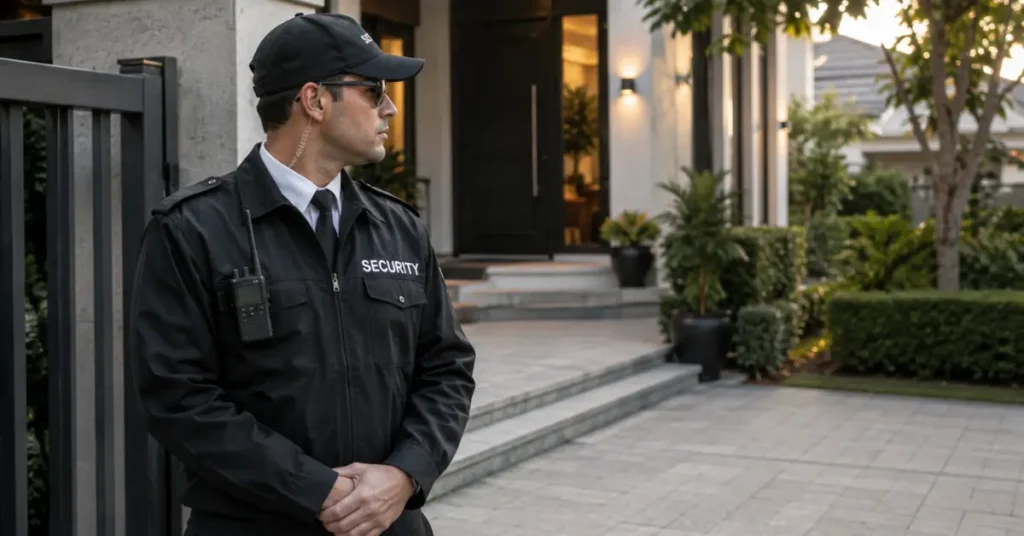
A home security guard can improve residential safety by providing a visible human presence that discourages unwanted activity, monitors access points, notices unusual behavior, and responds to developing problems. Unlike cameras or alarms alone, a guard can assess situations in real time and take appropriate action within their role.
For Atlanta homeowners, gated communities, private residences, and multi-family properties, this extra layer of protection can make everyday security more proactive. A guard can also help identify weak points around entrances, driveways, parking areas, and other parts of the property before they become bigger problems.
How Does a Security Guard Prevent Problems Before They Escalate?
A residential security guard provides something technology cannot provide on its own: physical presence and human judgment. Someone watching the property is more likely to notice unusual activity before it develops into an incident.
A guard may monitor entry points, observe visitors, conduct patrols, and document suspicious activity. The visible presence alone can make a property less attractive to someone looking for an easy target.
This approach works especially well when security is built around the property’s actual layout rather than using the same routine everywhere.
For example, a guard can pay closer attention to areas such as:
- Driveways and vehicle entrances
- Side gates and secondary doors
- Garages and parking areas
- Packages and delivery zones
- Poorly visible exterior areas
- Shared amenities in residential communities
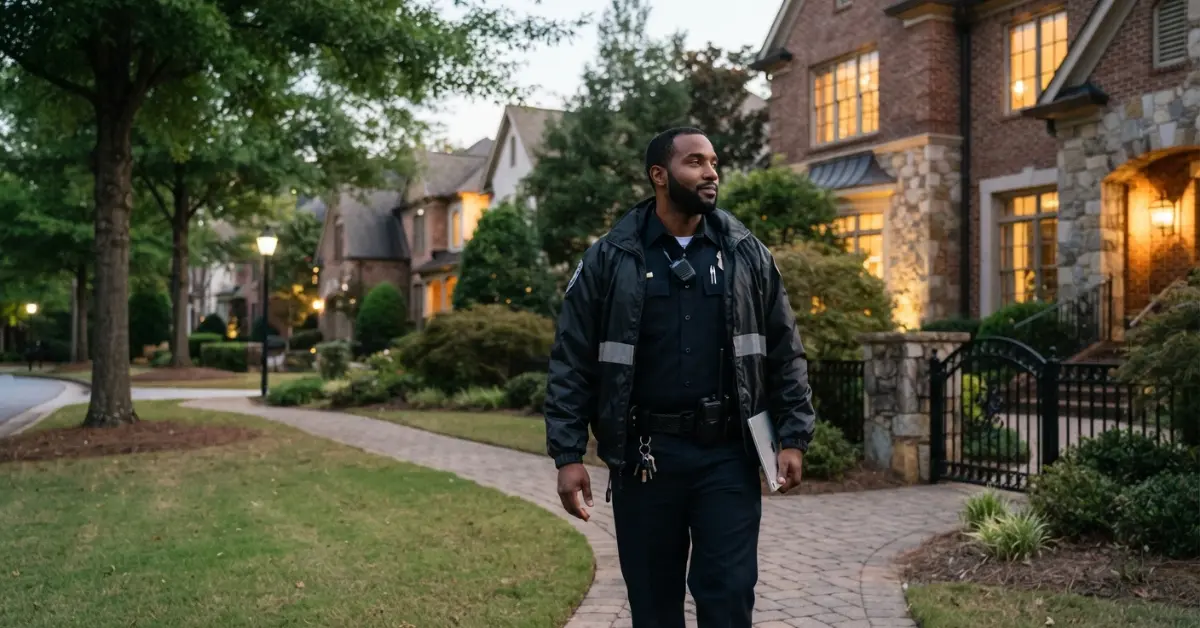
GoldStar’s existing guide on common security risks a professional guard can help prevent also explains why human observation can address weaknesses that alarms and cameras may not catch by themselves.
What Can a Home Security Guard Do That Cameras Cannot?
A home security guard can observe what cameras capture and then apply human judgment to the situation. Cameras are useful for surveillance and evidence, but they do not physically verify a visitor, patrol a property, or speak with someone who appears to be somewhere they should not be.
A guard can notice whether a vehicle repeatedly passes a property, whether an unfamiliar person is lingering near an entrance, or whether a gate has been left open.
This does not mean a guard replaces technology. The strongest approach can combine physical security with appropriate cameras, alarms, lighting, and access controls.
The guard becomes the human layer that connects these systems with what is actually happening on the property.
How Can Residential Security Improve Access Control?
Access control is one of the most practical ways to strengthen residential protection. A guard can help manage who enters a property, particularly where there are frequent visitors, contractors, deliveries, or shared entrances.
In a gated neighborhood or apartment community, the guard can verify visitors according to the property’s established procedures. At a private home, coverage can be structured around specific periods when access needs closer attention.
This can help reduce problems such as:
- Unauthorized visitors entering through open gates
- Tailgating behind authorized vehicles
- Unverified contractors approaching a residence
- Suspicious activity around entrances
- Uncontrolled visitor access during events or gatherings
In Atlanta neighborhoods and communities around areas such as Buckhead, Midtown, and surrounding residential districts, security needs can vary significantly based on property layout and resident activity. A customized plan is therefore more useful than relying on a fixed routine.
Why Are Visible Patrols Important for Residential Protection?
A visible patrol can discourage unwanted activity because potential offenders know that someone is actively watching the property.
Patrols can cover exterior areas, parking spaces, gates, walkways, common areas, and other vulnerable locations. Varying patrol patterns can also make it harder for someone to predict when a particular area will be checked.
For larger Atlanta residential properties, patrols can be especially useful when one fixed position cannot provide visibility across the entire site.
A private security guard can also identify smaller problems that may otherwise go unnoticed, such as damaged gates, broken exterior lighting, open doors, or unusual activity around a property.
These observations can help property owners address vulnerabilities before they contribute to a larger security incident.
How Can a Guard Strengthen Emergency Preparedness?
Security is not limited to preventing theft or unauthorized access. A trained guard can also provide an organized point of contact when an unexpected situation occurs.
During a fire, medical emergency, severe weather event, or other urgent situation, confusion can create additional risk. A guard familiar with the property can help direct people away from danger, communicate relevant information, and contact the appropriate emergency services when necessary.
A practical residential security process can include:
- Property assessment: Identify entrances, vulnerable areas, and common activity patterns.
- Post planning: Establish where and when security coverage is needed.
- Routine observation: Monitor access points and conduct scheduled patrols.
- Incident documentation: Record relevant events, observations, and actions.
- Plan adjustment: Review recurring concerns and strengthen weak areas.
GoldStar’s residential service information describes coverage options including courtesy officer posts, overnight patrols, marked vehicle patrols, gate and access control, and short-term residential coverage.
Explore residential security services in Atlanta to find a coverage approach that fits your property.
How Does Consistent Security Improve Everyday Home Safety?
Consistency is important because residential security depends on understanding normal activity. When security personnel become familiar with a property, unusual behavior can be easier to recognize.
For example, a regular guard may become familiar with common visitors, delivery patterns, contractors, parking activity, and normal resident routines. This can make it easier to identify something that does not fit the usual pattern.
Documentation is another important part of consistent security. Written incident and patrol records create a useful history of what happened and when.
For homeowners and property managers, this information can help identify recurring concerns and determine whether security procedures need to change.
What Should Atlanta Homeowners Consider Before Hiring Security?
Choosing residential security should start with the specific risk rather than simply selecting the most visible option.
Consider:
- Whether the property is a private residence or shared community
- Which entrances require monitoring
- Whether overnight coverage is necessary
- How much visitor traffic the property receives
- Whether patrols or a fixed post make more sense
- Whether the property has experienced previous incidents
- What type of reporting is expected
The provider should also be transparent about qualifications, licensing, insurance, staffing, and the actual duties assigned to guards. GoldStar states on its residential service page that it operates under Georgia Board license PSC002721 and describes its residential officers and training requirements.
For a local security provider, clear contact information also matters. GoldStar Security USA lists its Atlanta service location at 1201 W Peachtree St NW SUITE 2625 Atlanta, GA 30309 and states that it provides on-call service 24/7.
When Is a Home Security Guard Most Valuable?
A home security guard can be particularly valuable when a property has experienced a recent incident, when residents feel vulnerable, during extended travel, or when a property has multiple access points that are difficult to monitor.
The right coverage does not necessarily mean having a guard at the property around the clock. Some homeowners may benefit from overnight coverage, while others may need patrols, access control, or temporary protection during a specific situation.
The goal is to match the security method with the actual exposure of the property.
A layered approach can combine professional personnel with secure doors, lighting, cameras, alarms, visitor procedures, and good communication among residents.
How Can Professional Residential Security Create Long-Term Protection?
Residential security works best when it is proactive rather than purely reactive. Instead of waiting for an alarm or incident to reveal a weakness, a guard can help identify problems while they are still manageable.
For Atlanta homeowners, the right security plan should reflect the property, neighborhood, schedule, and specific concerns. A consistent presence can deter unwanted activity while also providing another layer of observation and emergency support.
A home security guard is therefore not simply someone standing at an entrance. When properly planned, residential security can combine observation, access control, patrols, documentation, and human decision-making to create a stronger overall safety strategy.
For homeowners looking for local residential protection, GoldStar Security USA provides security services tailored to residential needs in Atlanta.
Frequently Asked Questions
How much does residential security cost in Atlanta?
Residential security pricing depends on factors such as coverage hours, the number of security posts, property size, and whether you need patrols or a fixed position. The best way to establish an accurate price is to discuss the property and required coverage with the security provider rather than relying on a generic hourly estimate.
How quickly can residential security coverage begin?
Timing depends on the type of coverage, staffing requirements, property assessment, and scheduling. Urgent situations may require a different approach from ongoing residential protection. When contacting a provider, explain the reason for security, desired coverage hours, and any recent incidents so the appropriate service can be discussed.
What areas can residential security guards cover?
Residential security can be used for private homes, gated communities, condominiums, apartment communities, HOA properties, and other residential settings. Coverage can include entrances, gates, parking areas, common spaces, exterior perimeters, and other areas identified during the security planning process.
What does a residential security guard typically do?
Duties can vary by assignment, but residential security may include access control, visitor management, patrols, observation, incident documentation, and assistance during emergencies. The exact responsibilities should be established before service begins so everyone understands what the guard is expected to monitor and how incidents should be handled.
Can a security guard respond to an urgent incident?
A security guard can provide an immediate on-site security presence, assess the situation, follow the established response procedure, document the incident, and contact appropriate emergency services when necessary. Guards are not a substitute for police, fire, or medical responders, but they can provide valuable support while an emergency response is underway.
Should I choose a fixed guard or mobile patrol?
The better option depends on the property. A fixed post may work well when one entrance, gate, or lobby requires continuous attention. Mobile patrol can be more practical for larger properties where multiple areas need periodic checks. Some residential properties may benefit from combining both approaches during higher-risk periods.
Why choose GoldStar Security USA for residential protection?
GoldStar Security USA provides residential security services in Atlanta for settings including private residences, gated communities, condominiums, apartment communities, and HOA-managed properties. Its residential service page describes different coverage options and states that its Georgia security license is PSC002721.